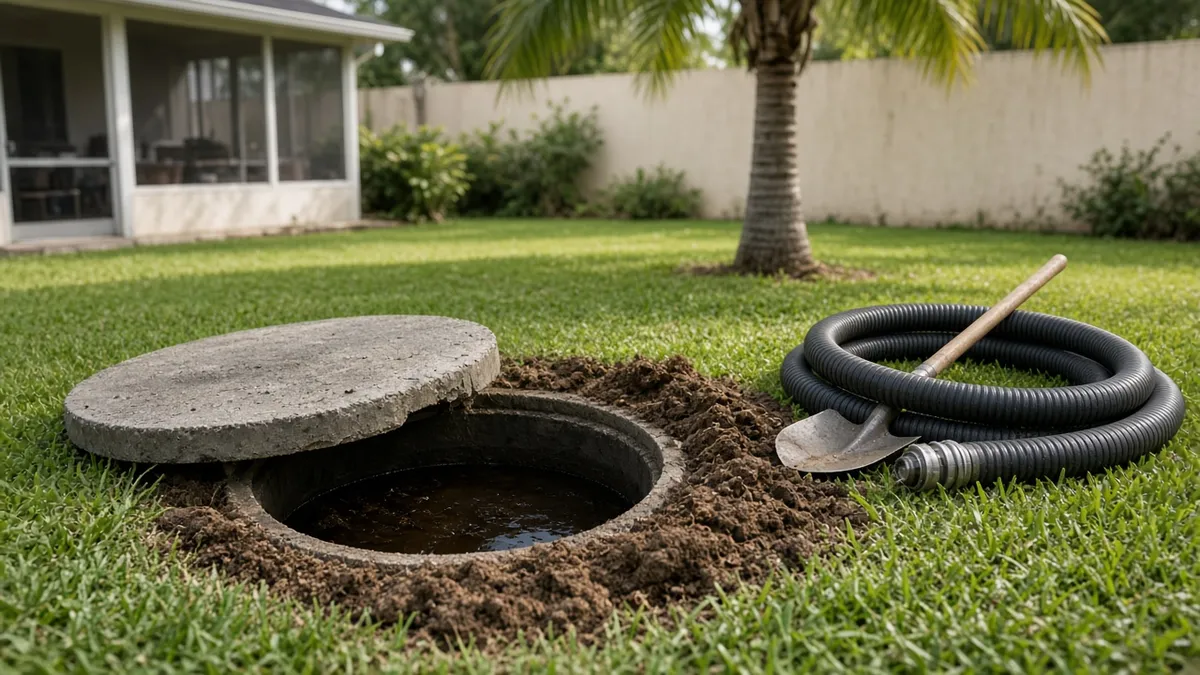
Selling a House With an Old Septic System in Central Florida
A lot of homes around Central Florida were never hooked up to city sewer. Older neighborhoods and larger lots in Seminole, Orange, Lake, Osceola, Volusia, and Brevard counties often run on a septic system buried in the yard. If you are getting ready to sell a house with an old, slow, or failing septic system, this guide walks through what sellers usually run into, what to find out first, and how a cash as-is sale compares with repairing and listing, as of 10-08-2026, in plain English. It is not legal, engineering, or environmental advice for your address.
A septic question does not have to stop a sale. It mostly changes who handles the work, how long it takes, and what it costs you along the way.
Signs a septic system may be a problem
Sellers commonly tell us about one or more of these:
- Slow drains, gurgling pipes, or toilets that back up after heavy use
- Soggy, extra-green, or smelly spots over the drain field, especially after a summer rain
- No record of the last pump-out, or no idea where the tank even is
- A tank or drain field that is decades old and has never been inspected
- Trees, a driveway, a pool, or an addition built over or near the drain field
- A past repair or replacement with no permit paperwork to show for it
Florida’s sandy soil and high water table can make drain-field trouble show up faster during the rainy season. Some systems only need a pump-out and a minor fix. Others need a new drain field or a full replacement. You usually will not know which until someone looks.
Step one: gather what you already have
Before you call contractors or buyers, pull together whatever records exist:
- Old pump-out receipts or inspection reports
- Septic permits or as-built drawings (the county or state environmental health office may have copies)
- Any notes from a past home inspection or a previous sale
- Letters from the county, HOA, or utility about sewer hookups or system problems
Some Central Florida areas have offered or required sewer connections in certain neighborhoods. If you have received a notice about connecting to sewer, keep it with your sale paperwork, because it can affect what a buyer will ask about.
Why septic matters to buyers
Many retail buyers, home inspectors, and lenders ask about the septic system before closing. A buyer may want a septic inspection or pump-out, and a bad report can lead to repair requests, a lower price, or a buyer who walks away. That can happen weeks into a contract, after you have already started planning your move.
Option 1: Repair or replace, then list
Fixing the system first can help you show buyers a clean report and may support a stronger retail price. Sellers usually plan for:
- Inspection and pump-out to learn the real condition of the tank and drain field
- Repair or replacement, which can range from a small part to a new drain field or tank
- Permits and approvals, since septic work in Florida generally needs to be permitted and inspected
- Yard restoration after digging, including sod, irrigation, or fencing
- Carrying costs while you wait for scheduling, permits, and the work itself
This path can make sense if you have time and cash for the work. Get more than one written bid from a licensed septic contractor before you commit.
Option 2: List as-is and disclose
You can list the house as-is and share what you know about the system. That avoids paying for repairs up front, but buyers who need a loan may still face lender and inspection requirements. Expect repair requests or price talks once a buyer’s inspector opens the lid. Ask any buyer up front whether they plan a septic inspection and how they will handle what it finds.
Option 3: A cash as-is offer
A cash buyer who purchases houses as-is can take the property with the septic system in its current condition. There is no loan, so there is no lender requirement to repair the system before closing. Swift Offers buys houses across Central Florida with a straightforward cash process, and we can work around your timeline.
A cash offer will usually be lower than a retail sale with a freshly repaired system, because the buyer takes on the repair cost, the permits, and the risk of what turns up underground. The fair comparison is your net proceeds and peace of mind, after repairs, commissions, carrying costs, and months of waiting, not just the list price.
Practical tips for Central Florida sellers
- Find the tank before anyone asks. Knowing where the lid is saves time for inspectors, contractors, and buyers.
- Don’t over-invest before you compare. Get a cash offer and a realistic retail estimate before paying for a full replacement.
- Keep the system easy on itself while you sell. Space out laundry loads, avoid putting grease or wipes down the drain, and keep cars off the drain field.
- Disclose what you know. Florida disclosure rules and your contract matter. Talk to a Florida real estate attorney if you are unsure what to share.
- Ask about any sewer notices. If your area is moving toward sewer hookups, find out the timing and any costs before you set a price.
Ready for a no-pressure cash offer?
If an old or failing septic system has you worried about selling your Central Florida house, or you just want a clear number before you spend money on repairs, request a cash offer from Swift Offers. Call or text +1 321-415-3705, email [email protected], or visit https://swiftoffers.co/. Tell us about the house and your timeline, and we will walk through next steps in plain English.
Disclaimer: This article is general seller education for Central Florida as of 10-08-2026. It is not legal, engineering, environmental, or tax advice for any specific property. Consult a Florida attorney, a licensed septic contractor, and your county environmental health office for your address and situation.
