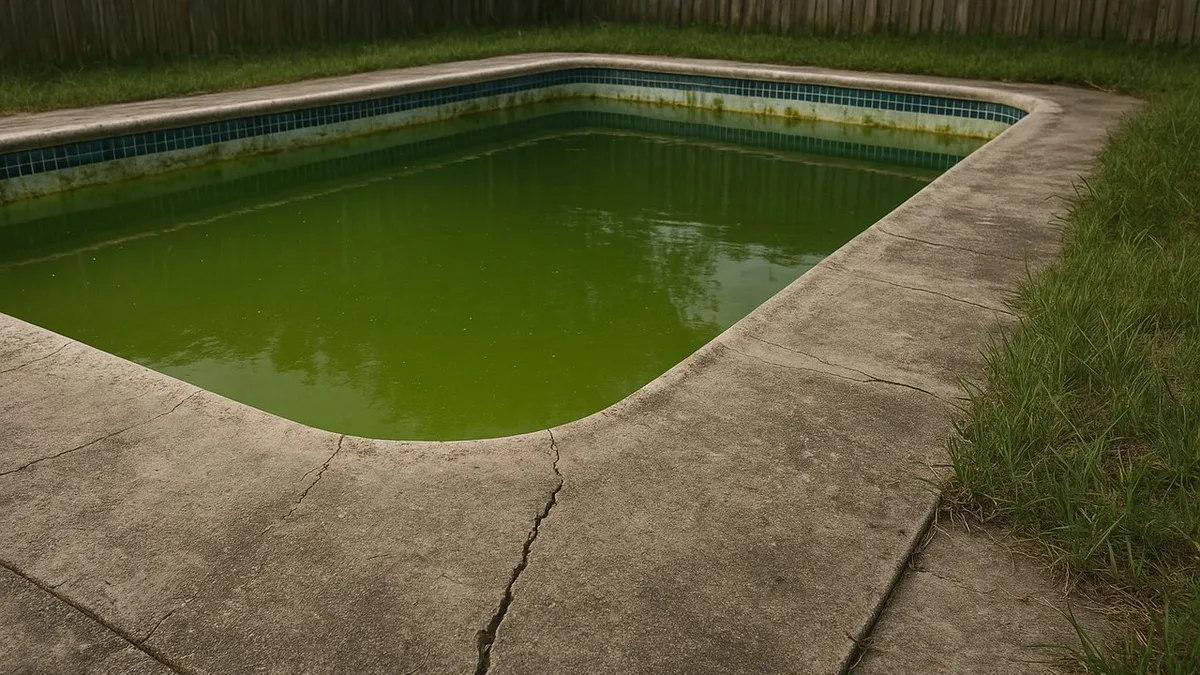
Selling a House With Pool Problems in Central Florida
A swimming pool can be a selling point in Central Florida — until it turns green, cracks, or the cage fails after a storm. If you are selling a house with pool problems in Orlando, Sanford, Kissimmee, Oviedo, or nearby towns, this guide covers what sellers usually see, what to gather first, and how a cash as-is sale compares with repairing and listing, as of 10-15-2026, in plain English. It is not legal, engineering, insurance, or home-inspection advice for your address.
Pool issues do not have to stop a sale. They mostly change who pays for the work, how long the house sits while you get bids, and what a retail buyer will ask for once the inspection starts.
Signs the pool is a sale problem
Sellers commonly tell us about one or more of these:
- Green or algae-filled water that will not clear with normal chemicals
- Cracks in the pool shell, plaster, or surrounding deck and patio edge
- Failing equipment — pump, filter, heater, salt system, or leaks at fittings
- Screen enclosure or cage damage after storms, rusted frames, or torn screening
- An empty or partially drained pool that raises safety and structural concerns
- Stained tile, crumbling coping, or a deck that has settled in Florida soil
In Central Florida, buyers and inspectors notice the backyard early. A neglected pool often shows up in the first photos and can overshadow an otherwise solid house.
Step one: gather what you already have
Before you spend money, pull together whatever records exist:
- Age of the pool, last resurface, and any past remodel invoices
- Recent service invoices, equipment quotes, or leak-detection reports
- Photos of the cage before and after storm damage, plus insurance claim notes if any
- HOA rules or architectural guidelines that mention pool enclosures or appearance
- Notes from a past home inspection or a previous listing
Knowing whether you are looking at a chemical cleanup, a pump swap, a shell repair, or a full cage rebuild helps you compare a repair path against a cash offer without guessing.
Why pool problems matter to buyers
Most retail buyers in Orlando and the surrounding counties treat a working, presentable pool as part of the lifestyle they are buying. A green pool, cracked shell, or damaged cage can lead to repair requests, a price cut, or a buyer who walks after they add contractor numbers to their budget. That can happen late in a contract, after you have already planned your move.
At a high level, HOAs sometimes care about how the backyard looks from the street or neighboring lots, and insurers may ask about empty pools, enclosure condition, or known leaks. Exact rules vary by association and carrier — confirm with your HOA and insurance agent rather than relying on a blog post.
An empty pool can also raise safety and structural questions for inspectors and lenders. Leaving problems unaddressed while the house sits often makes the next bid higher, not lower.
Option 1: Repair or restore, then list
Fixing the pool and enclosure first can help you show buyers a clean backyard and may support a stronger retail price. Sellers usually plan for:
- Diagnosis from a licensed pool contractor, with more than one written bid
- Cleanup or equipment repair for algae, pumps, filters, and heaters
- Shell, plaster, tile, or deck work when cracks or staining are the issue
- Screen enclosure repairs or rebuilds after storm damage, including permits when required
- Carrying costs while you wait for parts, scheduling, HOA approvals, and the work itself
This path can make sense if you have time and cash, and if a retail sale still nets more after the pool bill, commissions, and holding costs. Get competitive bids before you commit.
Option 2: List as-is and disclose
You can list the house as-is and share what you know about the pool. That avoids paying for a full restore up front, but many financed buyers will still ask for repairs or a credit once their inspector confirms the issues. Expect tougher negotiation around the backyard once offers arrive. Ask buyers early how they plan to handle a green pool, cracked deck, or damaged cage.
Option 3: A cash as-is offer
A cash buyer who purchases houses as-is can take the property with the pool in its current condition. There is no loan, so there is no lender requirement to restore the pool or rebuild the enclosure before closing. Swift Offers buys houses across Central Florida with a straightforward cash process, and we can work around your timeline.
A cash offer will usually be lower than a retail sale with a refreshed pool and cage, because the buyer takes on the repair cost and the risk of what else shows up under the deck or in the equipment pad. The fair comparison is your net proceeds and peace of mind, after repairs, commissions, carrying costs, and months of waiting — not just the list price.
Practical tips for Central Florida sellers
- Do not over-invest before you compare. Get a cash offer and a realistic retail estimate before paying for a full resurface or cage rebuild.
- Keep people and pets safe. Secure gates, cover or fence hazards when needed, and follow local safety rules for empty or neglected pools.
- Save every pool and cage quote. Buyers and cash offer teams both want to see the numbers.
- Disclose what you know. Florida disclosure rules and your contract matter. Talk to a Florida real estate attorney if you are unsure what to share.
- Check HOA and insurance early at a high level so you are not surprised by appearance rules or claim timelines mid-listing.
Ready for a no-pressure cash offer?
If pool problems have you worried about selling your Central Florida house, or you just want a clear number before you spend money on repairs, request a cash offer from Swift Offers. Call or text +1 321-415-3705, email [email protected], or visit https://swiftoffers.co/. Tell us about the house and your timeline, and we will walk through next steps in plain English.
Disclaimer: This article is general seller education for Central Florida as of 10-15-2026. It is not legal, engineering, insurance, home-inspection, or tax advice for any specific property. Consult a Florida attorney, a licensed pool contractor, your HOA, and your insurance agent for your address and situation.
